

Klinika dla Małych Zwierząt Wąsiatycz Magnetic Resonance Imaging (MRI)
-
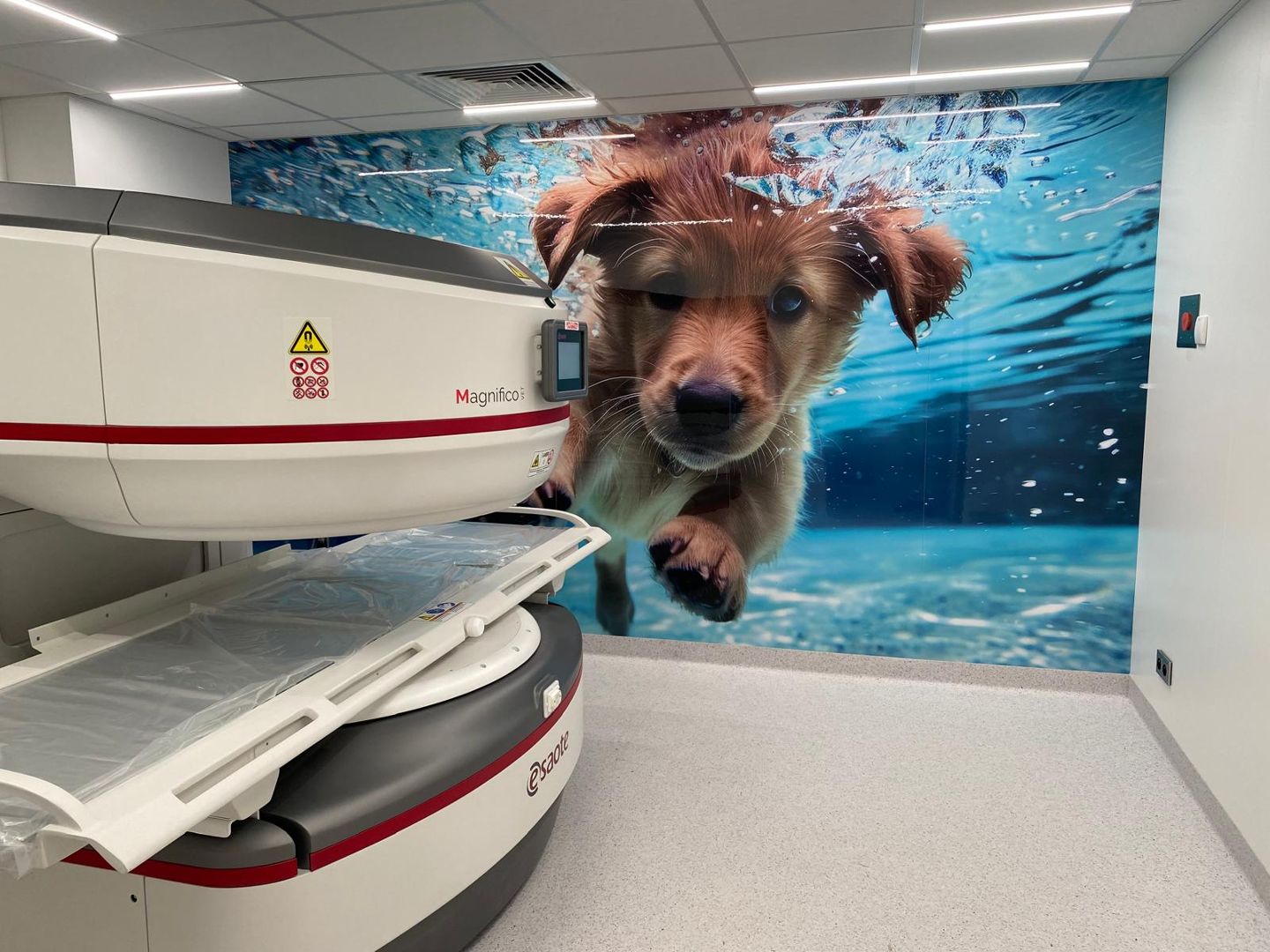
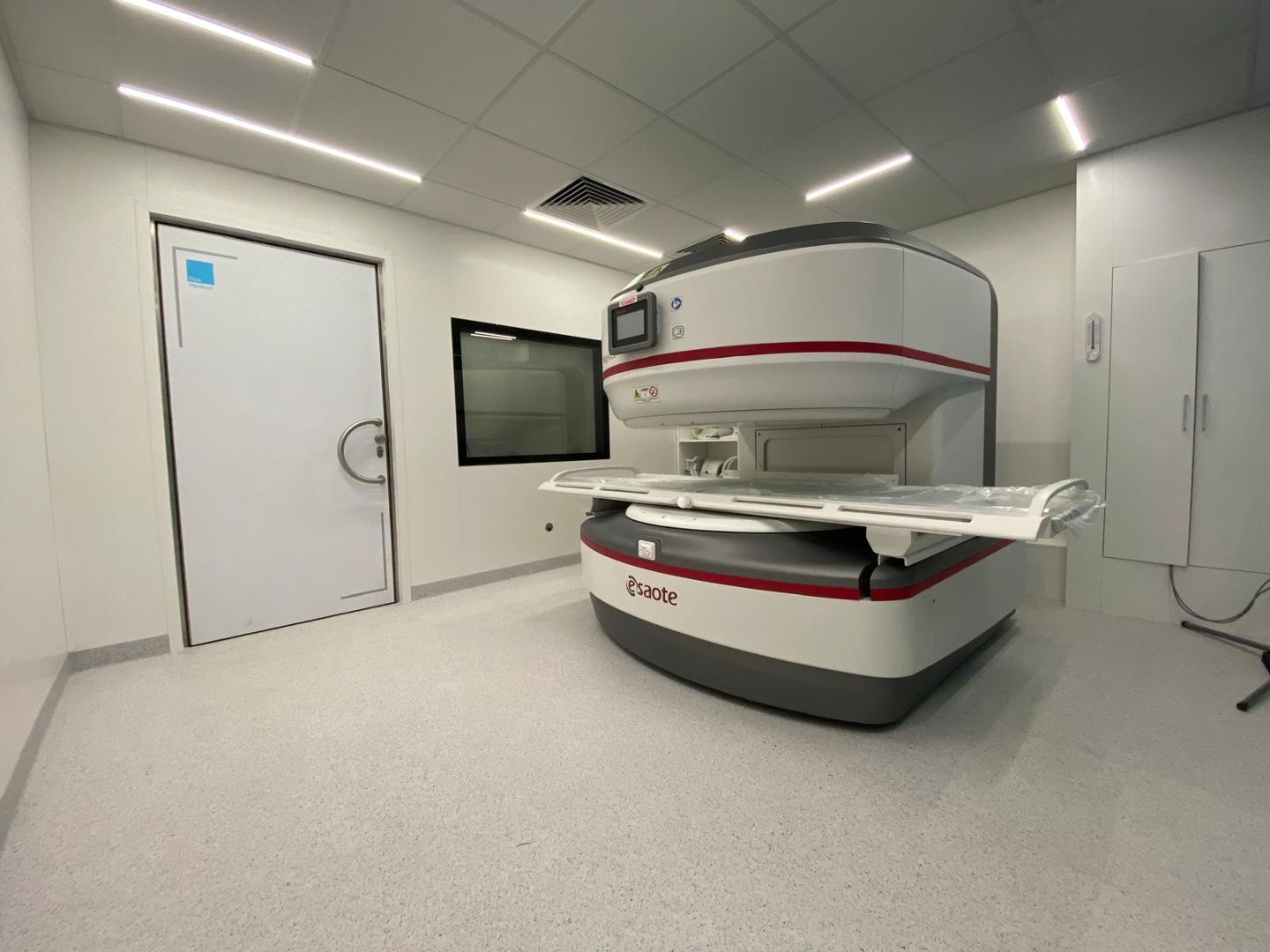
At our Clinic, the latest MRI scanner model from the Italian company ESAOTE is used.
-
MRI
At our Clinic, the latest MRI scanner model from the Italian company ESAOTE is used. Veterinary medicine in Poznań features modern, professional equipment, thanks to which it is able to efficiently and precisely diagnose, among others, neurological diseases and musculoskeletal injuries. The possibility of non-invasively obtaining detailed images of organs and tissues is extremely valuable, and that is precisely why MRI is so highly valued in veterinary medicine. Dogs and cats can receive appropriately selected treatment very quickly, thanks to the precise localization of pathological lesions. In this way, conditions such as tumors, damage to ligaments and joints, or inflammatory states in the brain are diagnosed.
Veterinary MRI in Poznań – at the Wąsiatycz Small Animal ClinicDoes your pet need an examination using specialized MRI equipment? Poznań is a city where many veterinary offices and clinics are located. Our Clinic, which is a 24-hour Clinic, stands out due to years of experience, and the qualified personnel are fully prepared to treat four-legged patients – and this is precisely where you should go. MRI scans for cats, dogs or other domestic animals will be performed with attention to the highest European standards. If you are looking for professional care and full diagnostics, this is the place for you!
Magnetic resonance is an invaluable tool in animal diagnostics, especially in cases where other imaging methods, such as X-ray or ultrasound, are unable to provide sufficient information. If your pet needs professional diagnostics, visit our Clinic and take care of its health.
Magnetic resonance is divided into high-field MRI (using superconducting magnets – extremely strong) and low-field MRI (using permanent neodymium magnets). High-field MRI always requires the removal of metal implants from the body; in the case of low-field MRI, this is not always necessary!
The ESAOTE MAGNIFICO MRI system, which we utilize, is a low-field MRI – it therefore requires the removal of metal implants ONLY from the vicinity of the examined area. For example, if we are scanning a section of the cervical spine, the chip, which is most often implanted on the left side of the neck, must be removed.
The time of the entire examination is several dozen minutes. It is a completely non-invasive and painless examination. Throughout the duration of the examination, however, the patient cannot move, which necessitates general anesthesia of the animal. However, it does not have to be deep! Thanks to this, only sedation is used initially (to calm the patient and allow intubation – insertion of an endotracheal tube), followed by maintenance with inhalational anesthesia alone. This is the safest anesthesia, minimizing the load on internal organs (e.g., kidneys and liver), and also enabling the fastest recovery.
In conclusion: an MRI examination is a very precise and targeted examination! It is not used for performing survey scans of larger body parts, but only for detailed imaging of a specific organ that shows dysfunctions identified by other diagnostic methods.
Contraindications for the MRI examination:
- Metal implants in a location close to the examined area
- Contraindications to prolonged inhalation anesthesia*
Patient preparation for the MRI examination:
- The patient should fast (8-10 hours without food but with free access to water)
- Clinical examination
- Basic blood tests at minimum (kidney and liver function)
- Cardiac examination
The magnetic resonance examination itself does not constitute any threat to the life and health of the patient (even if they have metal implants in their body). The only threat may be the necessity of long-term (lasting several tens of minutes) anesthesia. During the examination, the patient cannot make absolutely any movement, as this will make it impossible to take a diagnostic scan!
*Note! Every administration of any preparation intravenously, subcutaneously, intramuscularly, or via inhalation, and in particular anesthesia preparations, can constitute a potential threat to life. Although the threat is extremely small, it is impossible to 100% predict adverse reactions, hypersensitivity, or allergic reactions to a given substance!
Download the referral form for a Magnetic Resonance Imaging (MRI) scan!
Contact us
The clinic is open 24/7
Phone Numbers: 61 823 09 97, 61 828 56 01, SMS 799 448 116
e-mail: lp.tewnilkajcpecer
Veterinary Cardiologist - Poznań | Veterinary Ophthalmologist - Poznań | Veterinary Dermatologist - Poznań | Veterinary Neurologist - Poznań | Veterinary Surgeon - Poznań | Veterinary Hematologist - Poznań | Veterinary Endocrinologist - Poznań | Veterinary Orthopedic Surgeon - Poznań | Veterinary Gastroenterologist - Poznań | Veterinary Dentist - Poznań | Veterinary Geriatrician - Poznań | Veterinary Urologist & Nephrologist - Poznań
 This site uses cookies for functional and statistical purposes