

Klinika dla Małych Zwierząt Wąsiatycz Laboratory Testing
-
We provide the highest standards of veterinary medical care.
-
Scope of Laboratory Testing
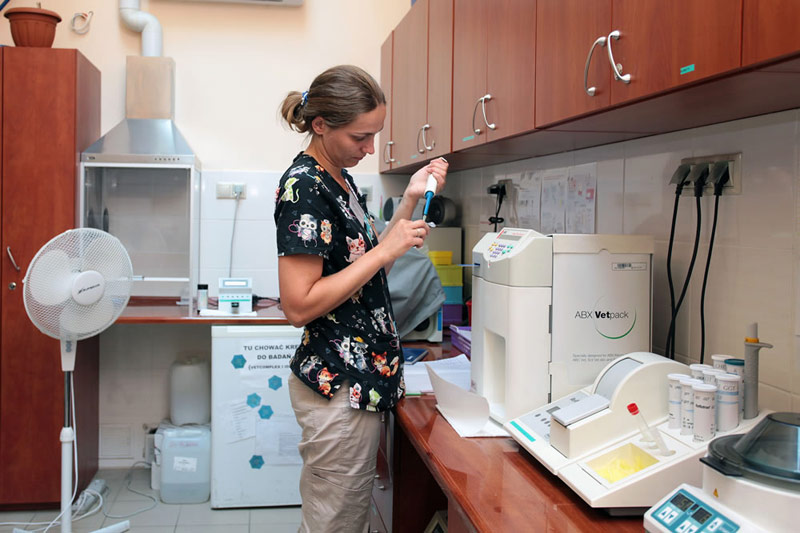
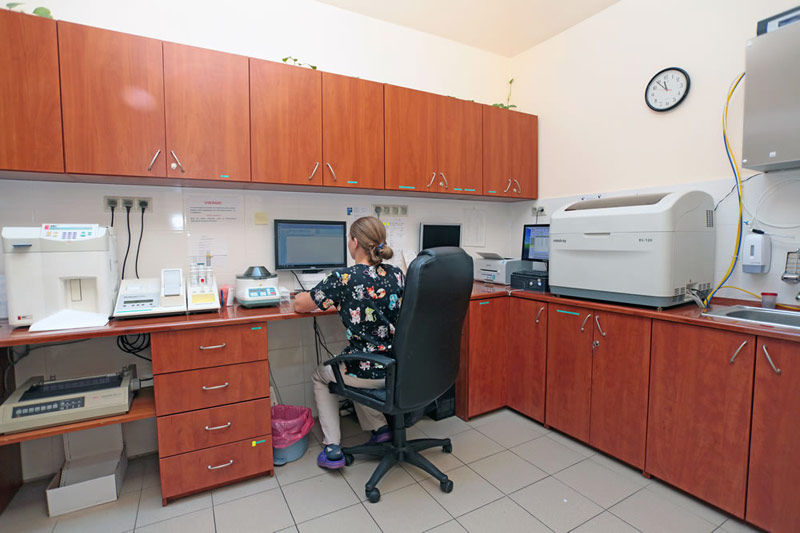
While clinical examinations remain a vital component of animal diagnostics, it is increasingly difficult to reach a precise diagnosis based on physical exams alone. This is where additional laboratory testing becomes indispensable. These results significantly assist veterinarians in making an accurate diagnosis, allowing for the implementation of targeted and effective therapy.
-
Hematology
This set of analyses, combined with the microscopic examination of a peripheral blood smear, allows for a comprehensive assessment of the hematopoietic system. These tests are a core part of the diagnostic package offered by our laboratory.
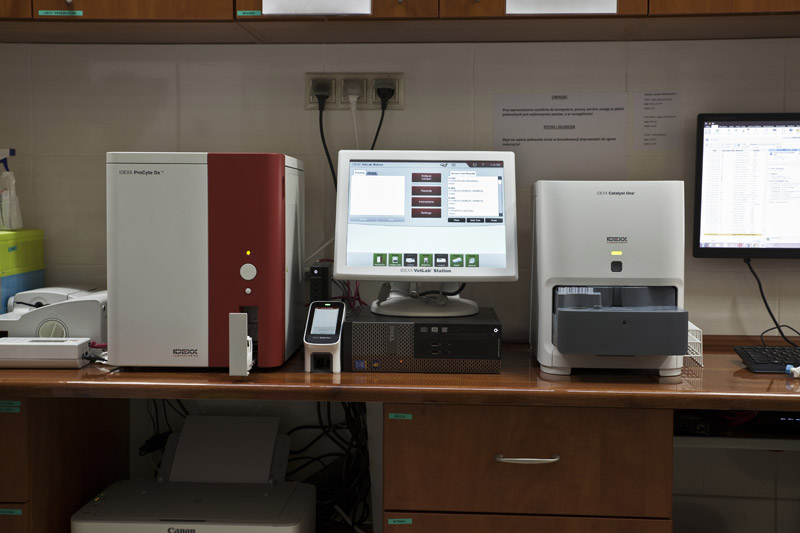
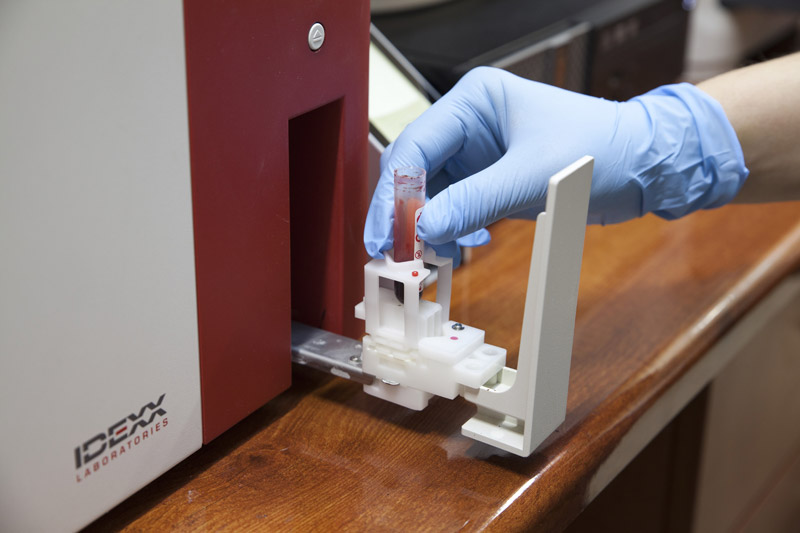
Complete Blood Count (CBC) is performed using IDEXX analyzers and determines:
- Hemoglobin concentration: Enables the assessment of anemia and allows for monitoring the effectiveness of blood transfusions. It also helps evaluate hydration levels (dehydration or overhydration).
- Hematocrit: This test assesses anemia and overall hydration status; it holds similar diagnostic value to hemoglobin measurement.
- White Blood Cell count: An increase (leukocytosis) suggests an immune response to inflammation, bacterial infections, or hematological proliferative diseases. A decrease (leukopenia) may result from severe bacterial or viral infections, decreased immunity, or disorders in white blood cell production.
- Platelet count: Can identify the cause of petechiae, oozing from wounds, and clotting issues.
- White blood cell differential: Provides an initial assessment of the white blood cell system components.
A comprehensive assessment of the hematopoietic system is completed by a manual peripheral blood smear, also known as a leukocytogram. In laboratory jargon, a peripheral blood smear refers to a microscopic examination of a blood specimen stained with appropriate reagents. The correct interpretation of the microscopic image of a leukocytogram requires significant experience and knowledge from the analyst, as well as meticulousness and precision during the evaluation of the specimen.
A reliably assessed smear should include a morphological description of red blood cells and platelets, as well as the white blood cell composition. It allows for the diagnosis and differentiation of anemia, myeloid and lymphoblastic leukemias, malignant tumor metastases to the bone marrow, etc.
Our laboratory also prides itself on effective diagnostics (and high detection rates) of babesiosis. The vast majority of babesiosis cases in dogs are caused by Babesia canis, and less frequently by Babesia gibsoni. Ticks are the source of infection and the subsequent disease. Performing a manual peripheral blood smear for Babesia canis and obtaining a positive result enables the rapid application of effective pharmacotherapy, resulting in the dog's recovery.
-
Biochemical Testing
Biochemical disorders that cause disease can develop with varying dynamics, being reflected to a greater or lesser extent in laboratory test results. Explaining the biochemical foundations of health and disease states is usually the basis for rational treatment. Therefore, the proper utilization of biochemical test results becomes a valuable aid in early detection, accurate diagnosis, and appropriate treatment of many disease entities.
The biochemical test package performed in our laboratory includes:
- ALT;
- AST;
- Alkaline Phosphatase ALP;
- Creatine Kinase (CK);
- Amylase;
- Total Bilirubin;
- Total Protein;
- Albumin;
- Cholesterol;
- Triglycerides;
- Coagulation Testing;
- Glucose;
- Urea;
- Creatinine;
- Calcium;
- Phosphorus;
- NH3;
- TT4;
- SDMA;
- CRP,
- Potassium;
- Lipase;
- Chlorides.
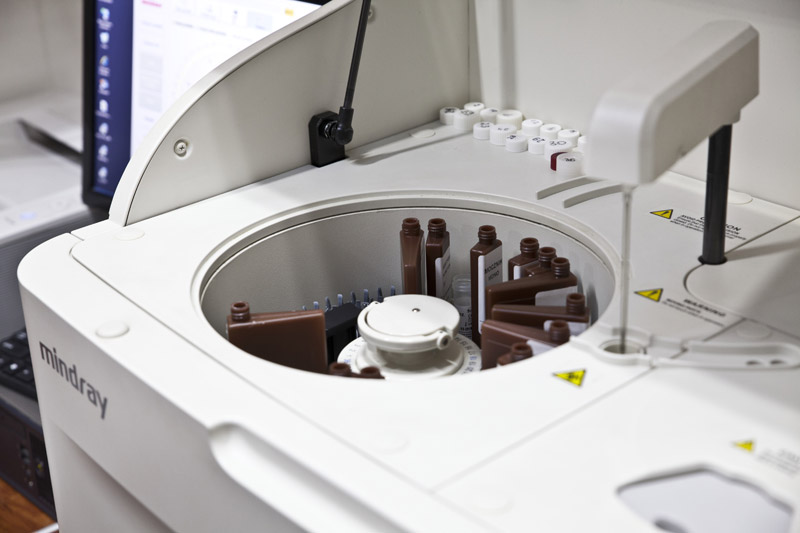
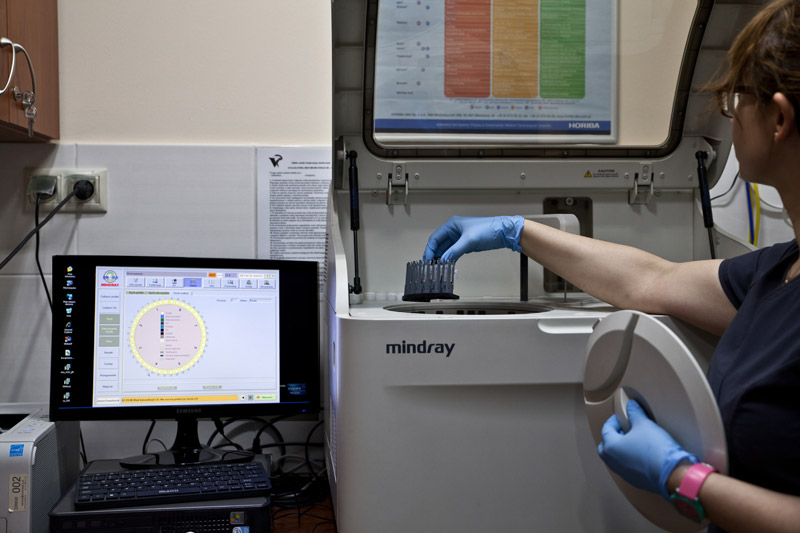
The aforementioned tests are performed on photometric equipment from "Pointe Scientific".
-
Urinalysis
The end products of metabolism are removed from the body primarily through urine and feces. The volume and chemical composition of excreted urine are variable and depend on the functional state of the kidneys and the concentration of chemical substances in the blood.
Basic information about kidney function is provided by testing the physical and biochemical properties of urine. Additionally, urinary sediment examination can be a very important indicator in diagnostic testing for renal dysfunction. Sometimes, it is important to precisely determine the urine specific gravity. In our Clinic, this measurement is performed using a refractometer. Such a precise measurement is essential for, among other things, the differentiation of diabetes insipidus in dogs and cats.
-
Parasitological Testing
"Strange" behavior of a pet (e.g., "scooting"), a lack of appetite or, on the contrary, a ravenous appetite, yet weight loss nonetheless are just some of the symptoms that should prompt us to perform parasitological testing. The clinical picture of parasitic diseases is generally non-specific; therefore, the basis for diagnosing most parasitic diseases is the direct or indirect detection of the parasite's presence. Even in cases where an experienced veterinarian can identify symptoms indicating the presence of a specific parasitic infection, such a diagnosis should be confirmed by a positive result from a parasitological fecal examination.
In the diagnosis of parasitic infections, there are two fundamental problems: detecting and identifying the parasite, and establishing a link between the presence of the infection and the disease symptoms. Identifying the parasite species requires the fecal examiner to possess not only proficiency and experience in parasite recognition but also knowledge of the biology of the parasite responsible for the infection.
-
Histopathology
Among the wide range of specialized diagnostic tests offered by our Clinic, histopathological examinations occupy an important place, particularly as the scope of diagnostic application and the significance of histopathology in daily veterinary practice continue to grow.
The subjects of histopathological examinations are surgically removed organs or parts of organs, tissue sections, and distinct pathological lesions specifically collected during surgical procedures, referred to as a biopsy.
Histopathology, also known as pathological histology, deals with the study and diagnosis of phenomena at the microscopic level occurring in the body's cells and tissues during various types of conditions. Histopathological examination of tissue material holds particularly high diagnostic value, primarily in identifying neoplastic diseases, numerous inflammatory and degenerative conditions, as well as in monitoring treatment progress and determining the cause of death (post-mortem examination).
An additional advantage of this type of testing for neoplastic changes is that it not only differentiates malignant from benign tumors but also allows for the precise determination of the tumor's histological type or its degree of differentiation.
Contact us
The clinic is open 24/7
Phone Numbers: 61 823 09 97, 61 828 56 01, SMS 799 448 116
e-mail: lp.tewnilkajcpecer
Veterinary Cardiologist - Poznań | Veterinary Ophthalmologist - Poznań | Veterinary Dermatologist - Poznań | Veterinary Neurologist - Poznań | Veterinary Surgeon - Poznań | Veterinary Hematologist - Poznań | Veterinary Endocrinologist - Poznań | Veterinary Orthopedic Surgeon - Poznań | Veterinary Gastroenterologist - Poznań | Veterinary Dentist - Poznań | Veterinary Geriatrician - Poznań | Veterinary Urologist & Nephrologist - Poznań
 This site uses cookies for functional and statistical purposes